Privacy for High-Net-Worth Individuals
Privacy as a Design Principle
Many donors value discretion. Any system that assumes public exposure will alienate them.
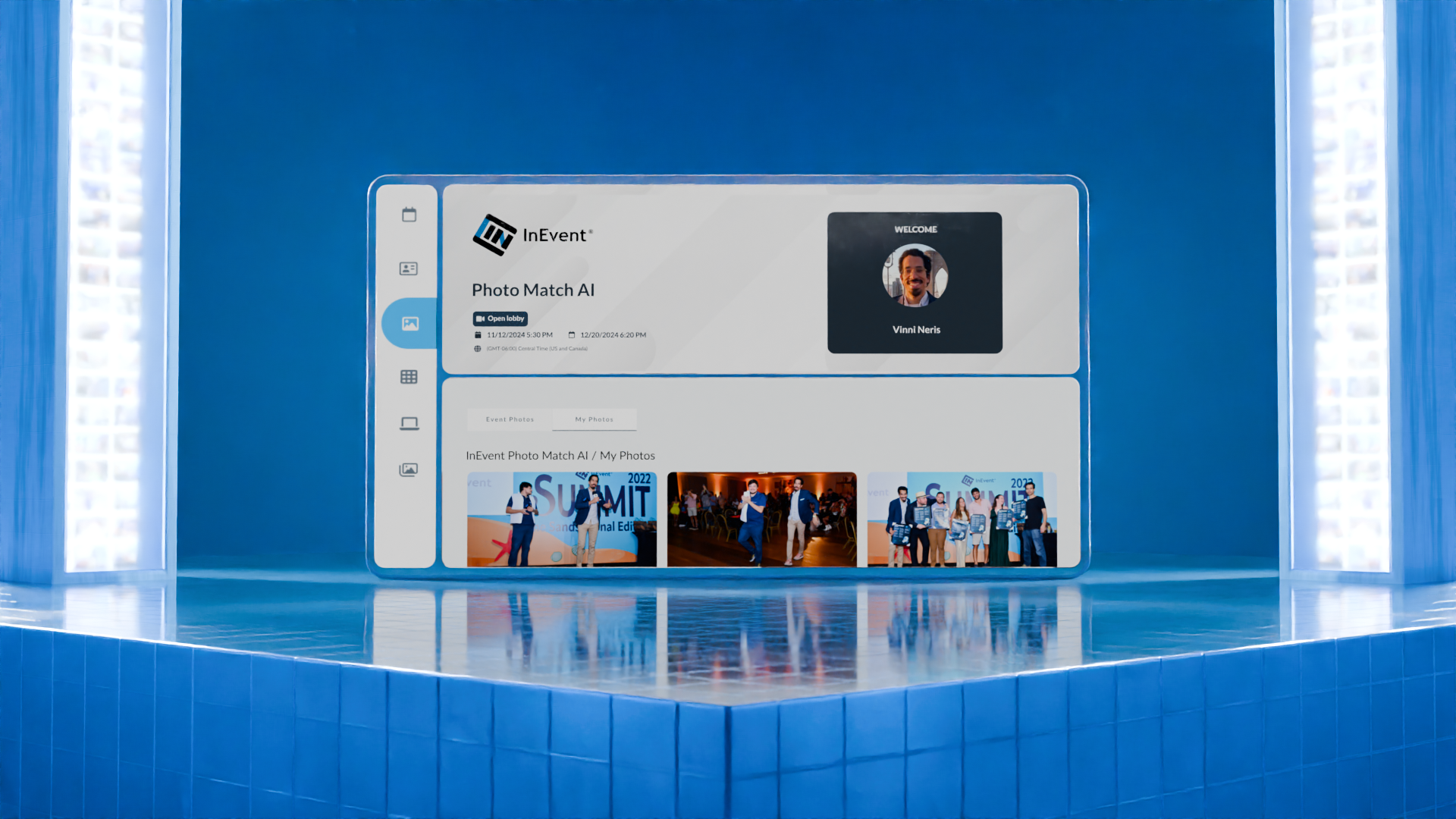
AI Photo Match defaults to privacy.
Structural Safeguards
Each event is isolated.
Private Mode for VIPs
For ultra-high-net-worth individuals:
Case Hypothetical: The Discreet Philanthropist
A prominent donor attends a humanitarian gala quietly. Their assistant opts them into Private Mode.
The donor receives photos privately, appreciates the respect, and increases their commitment the following year.
Trust compounds.
Operational Reality
Implementation requires minimal change:
-
QR codes at entry.
-
Connectivity.
-
Photographer uploads.
Staff training is minimal. The system runs quietly.
Measuring What Actually Matters: Impact, Not Just Impressions
Measurement often undermines gala strategy by focusing on the wrong signals. Social media reach, public shares, and likes are visible but incomplete. In high-net-worth and professional donor circles, much of the most meaningful engagement happens privately. Messages are forwarded to spouses, advisors, and peers through trusted channels that never register as public metrics.
AI Photo Match enables more relevant measurement. Time-to-delivery becomes a key indicator. Faster delivery correlates with higher engagement and satisfaction. Share velocity, rather than raw share count, reflects emotional resonance. When photos move quickly within the first hour, they are still attached to context and pride.
Sponsor value is measured differently as well. Instead of counting logo exposures in a room, organizations can report post-event circulation. How many photos were saved. How many were shared. How long sponsor overlays remained visible in personal networks. This shifts sponsorship conversations from anecdotal appreciation to documented impact.
Data quality improvements are measurable. Updated contact records, confirmed mobile numbers, and corrected preferences provide tangible operational gains. These metrics matter internally even if they are not broadcast externally.
Finally, retention indicators strengthen. Donors who receive immediate reinforcement are more likely to respond to follow-up, attend future events, and renew sponsorships. These correlations become visible over time, giving development teams evidence to support continued investment.
By focusing on indicators that reflect behavior rather than vanity, organizations gain a clearer picture of what actually moved the needle. Measurement becomes a tool for learning, not justification.
Closing Perspective
A gala should not end when the lights go down.
AI Photo Match extends the moment, honors the donor, and amplifies the mission through authentic networks.
It transforms photography from documentation into infrastructure.
That is how fundraisers evolve into movements.
Ethics, Consent, and Facial Technology in the Non-Profit Context
Facial technology carries unique ethical weight in nonprofit settings. Organizations exist to serve public good, protect dignity, and steward trust. Any perception of surveillance or coercion undermines that mission. AI Photo Match succeeds precisely because it is built around voluntary participation rather than identification.
The ethical distinction begins with consent. Guests are not identified by default. There is no background scanning. There is no attempt to recognize faces without permission. Participation requires an explicit opt-in initiated by the donor. The donor chooses to provide a reference selfie, knowing exactly what it will be used for: matching photos from that specific event.
Scope limitation is equally important. Facial references are event-bound. They are not retained across events. They are not used to build profiles. They are not repurposed for marketing, analytics, or identification outside the stated context. Once the event concludes and the delivery window closes, facial references expire. This prevents mission creep and eliminates the risk of secondary use.
This architecture differentiates AI Photo Match from social media tagging, public galleries, and consumer photo platforms. Those systems often assume exposure by default and place the burden of privacy on the user. Here, privacy is the default. Visibility is optional. Sharing is optional. Silence is respected.
Consent is not buried in legal language. It is expressed in plain terms at the moment of value exchange. “Get your gala photos instantly” is a clear proposition. Guests understand what they are receiving and what they are providing. This transparency is critical in nonprofit environments where power dynamics and donor relationships must be handled carefully.
For organizations concerned about reputational risk, this ethical posture matters as much as legal compliance. Donors are sophisticated. They recognize when technology is extractive versus supportive. Systems that respect autonomy reinforce trust rather than erode it.
Importantly, ethics are not enforced through policy alone. They are enforced through design. By removing public galleries, disabling search, and isolating each event, AI Photo Match eliminates entire classes of misuse before they arise. Staff do not need to police behavior because the system does not allow questionable behavior in the first place.
In nonprofit contexts, technology must earn the right to exist. Ethical clarity is not an accessory. It is the foundation that allows innovation to support, rather than compromise, mission.