


One of our sales representatives will contact you shortly.
ATLANTA, Georgia, September 2026. For years, a packed agenda could signal value: more speakers, more sessions, more tracks and more content packed into every available hour.
New industry research suggests event professionals may need to reconsider that equation.
Recent Freeman research involving more than 4,700 attendees and 185 organizers found that while 83% of organizers believe content is a key event differentiator, only 41% of attendees agree. The same research found that about half of attendees skip sessions, including keynotes, to take breaks, connect with others, or catch up on work.
The findings point to a larger question for event teams designing 2027 programs: Does every available minute need to become another session?
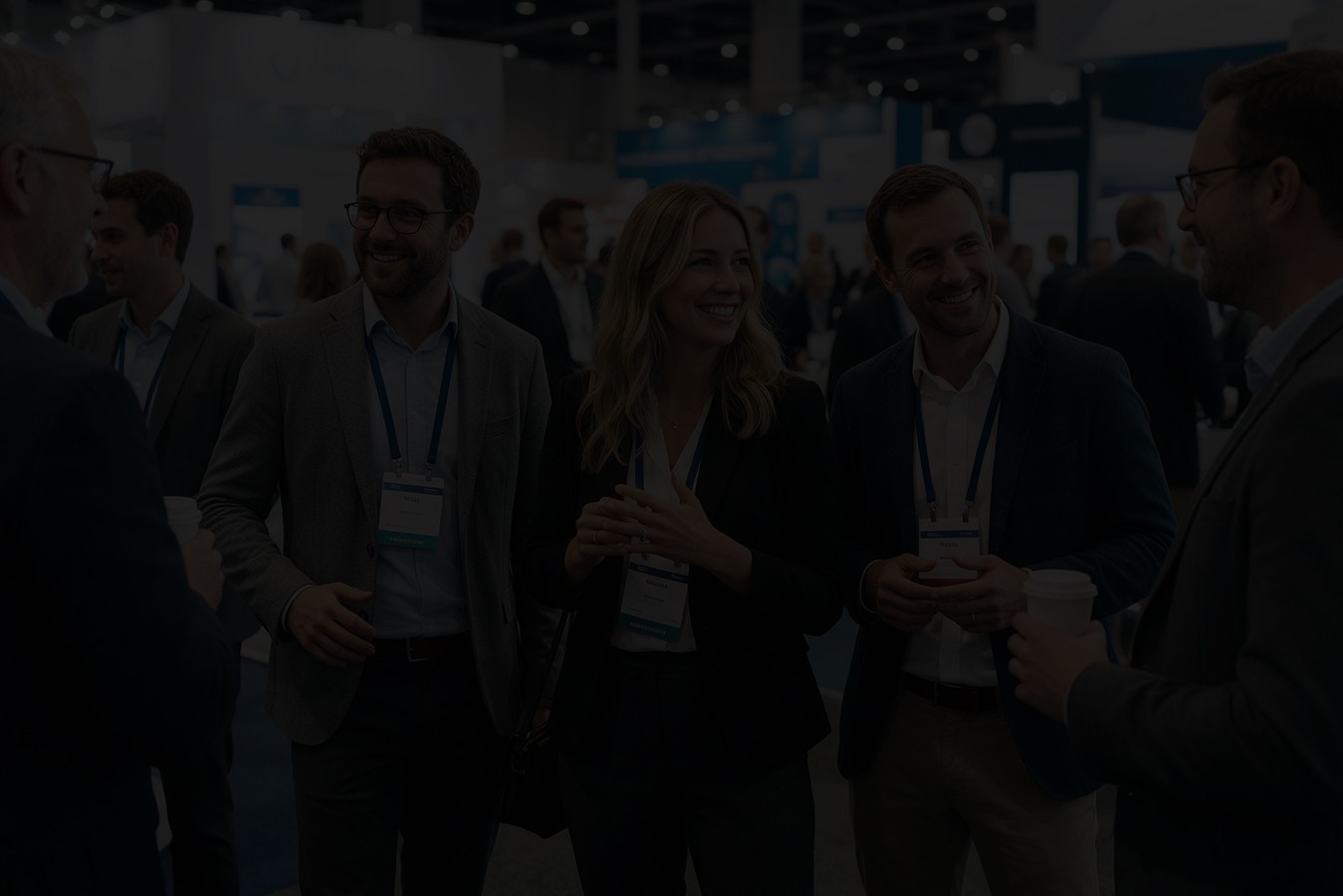
For InEvent, the answer is increasingly about balance. Strong content remains fundamental to conferences and professional events, but its value can extend beyond what happens onstage. The conversation after a keynote, the peer discussion following a workshop, or the spontaneous exchange between attendees confronting the same business challenge can become part of the learning experience itself.
“An event agenda should create momentum, not exhaustion,” said Pedro Góes, CEO and Co-Founder of InEvent. “Content can introduce an idea, but attendees also need opportunities to discuss it, challenge it, and understand what it means for their own work. Sometimes the most valuable next session is actually a conversation.”
The issue is not that attendees no longer want educational content.
In-person events remain an important environment for professional learning. The challenge is how organizers deliver that learning.
Freeman's 2026 research found a substantial gap between organizers' confidence in content and attendees' perception of its value. It also found that attendees are deliberately stepping away from programmed sessions during events.
Earlier Freeman research identified a similar warning sign among younger audiences: 47% of Gen Z attendees cited overprogrammed days as the leading factor behind an unsatisfactory event experience. The recommendation was straightforward: avoid overscheduled agendas and deliberately create breaks between keynotes and sessions so attendees have time to interact.
For planners, that distinction matters.
An attendee leaving a session room is not necessarily disengaging from the event.
They may be continuing a discussion from the previous session, meeting someone they specifically traveled to see, comparing ideas with a peer, or simply creating enough mental space to absorb what they have already heard.
The empty space between sessions may therefore be doing more work than the agenda suggests.
Networking has traditionally been treated as something that happens before the keynote, during coffee breaks, or at the reception after the formal program ends.
Current attendee research suggests connection deserves a more deliberate place in the agenda.
Freeman's networking research found that 51% of attendees say effective networking alone is enough reason to return to an event. More than one-third said networking needs to feel curated to be effective, while nearly half wanted recommendations on whom to meet before arriving.
Yet research highlighted by PCMA in 2026 found a significant disconnect between perceived importance and programming decisions. Nearly half of respondents ranked peer networking as the leading driver of event success, ahead of content at 43%. Despite that, only 8% dedicated more programming to structured attendee connection, while 18% left connection entirely to chance.
That gap creates an opportunity.
Roundtables, facilitated introductions, topic tables, peer exchanges, and intentionally open periods can turn conversation from something attendees are expected to find for themselves into part of the experience planners deliberately design.
The separation between “content” and “networking” is also becoming less useful.
Freeman's latest learning research indicates that attendees expect more than half of their event learning to happen outside traditional conference rooms, including through product discovery, demonstrations, and conversations with subject-matter experts.
Its research into live event design goes further, identifying the ability to connect with people facing similar interests and challenges as one of the things attendees value most within learning experiences. Freeman's own application of the research has included expert exchanges, small-group discussions, and peer groups organized around shared interests and experience levels.
That changes the role of content.
A keynote does not necessarily have to contain every answer. It can introduce the idea attendees continue discussing afterward.
A panel can lead into a moderated roundtable.
A workshop can create a question that follows attendees onto the expo floor.
A subject-matter expert can continue teaching through a five-minute conversation after leaving the stage.
The person sitting beside an attendee can sometimes become as important to the learning experience as the person presenting to the room.
Making room for more attendee-led learning also creates a new challenge: understanding which subjects deserve those conversations.
Session attendance and post-event surveys provide part of that picture, but enterprise organizations running multiple events can accumulate signals across an entire portfolio.
InEvent recently made AI Reports available at the company level, allowing event teams to examine information across company events rather than restricting analysis to an individual program.
Designed to help teams understand how content and topics are being used across their events. When enabled, topics gathered across multiple events can also be surfaced through Reports AI, including through visual representations such as word clouds.
The capability is currently in testing with limited availability and is not yet a general product release.
Its significance extends beyond reporting.
If event teams can identify subjects that repeatedly appear across programs, those signals could eventually help inform programming decisions: which topics warrant deeper education, which deserve a workshop, where audiences may benefit from peer discussion, and which conversations continue beyond a single event.
In that sense, data can help planners decide not simply what content to add, but what kind of experience a topic actually requires.
Traditional content measurement often ends with registration, session attendance, or a satisfaction score.
A more participatory event model raises additional questions.
Did the session lead attendees into a deeper conversation? Did people seek out an expert afterward? Did a topic generate connections between attendees? Did the same subject continue appearing across other events? Did the experience give someone an idea they could actually apply when they returned to work?
Those signals are harder to capture than counting seats in a session room, but they may provide a more complete picture of whether content created value.
They also reinforce why conversation and content should not necessarily compete for agenda space.
The strongest events can strengthen the other.
As event teams begin designing 2027 programs, the next evolution of the agenda may not involve finding room for another session.
It may involve becoming more deliberate about what not to schedule.
That does not mean leaving hours of an event without purpose. White space can itself be designed: a longer transition between sessions, a facilitated conversation immediately following a keynote, an open lounge organized around common interests, or simply enough time for attendees to follow up with someone they have just met.
For years, agenda density has often been used as shorthand for value.
Current attendee behavior suggests the opposite may sometimes be true.
The next generation of event agendas may be judged not only by the quality of the content they contain, but by whether they leave enough room for people to do something with it.
InEvent is an enterprise event technology platform that helps organizations plan, manage, and scale in-person, hybrid, virtual, and webinar experiences worldwide. InEvent supports event registration, attendee management, onsite operations, engagement, networking, analytics, integrations, and AI-powered event management for modern enterprise event programs.